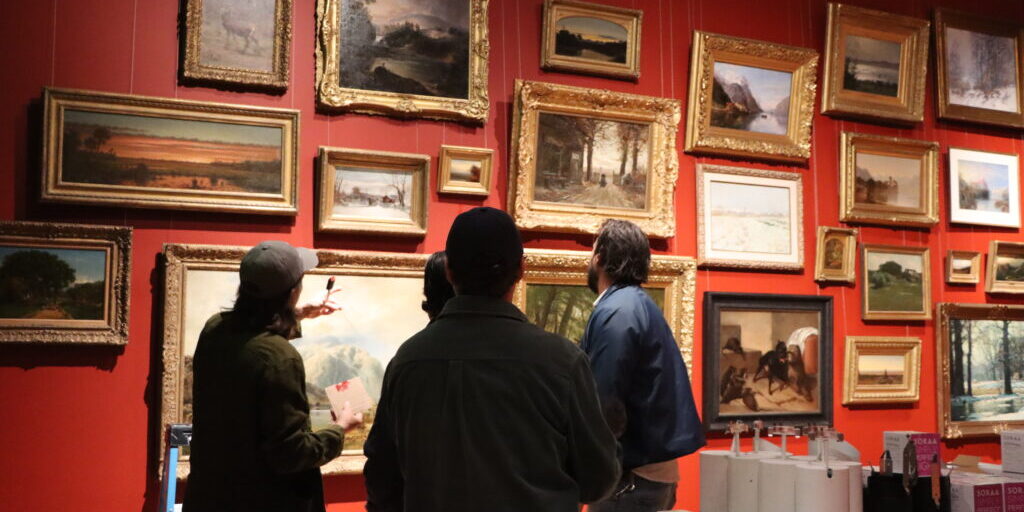
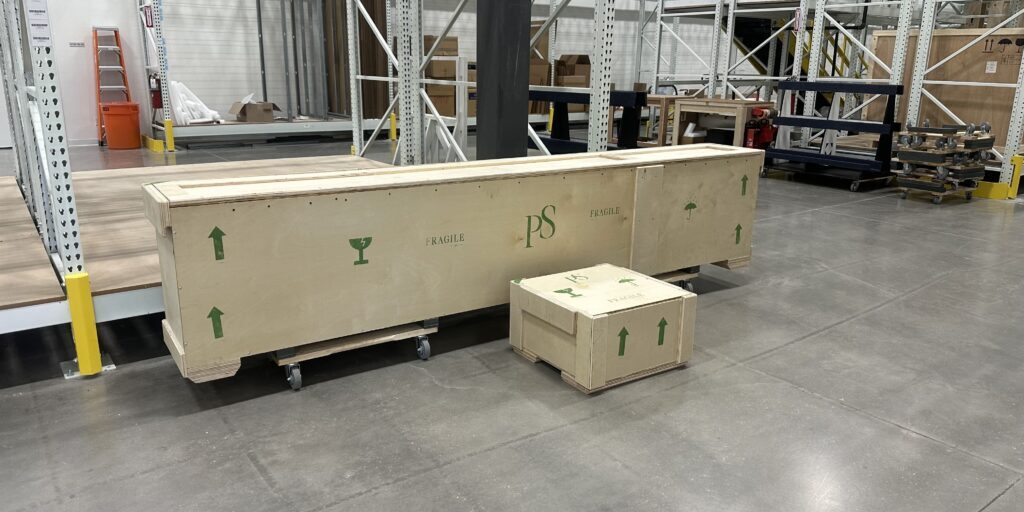
Most people who visit a museum never think about what happened before they arrived. The works on the wall, the sculptures anchored to the floor, the pedestals positioned just so — all of it appears as if by magic. Someone made that magic happen. In the art world, that someone is a preparator.
We sat down with Alex Burnett, Founder and Chief Preparator of Preparator Solutions, to talk about how he got his start in the industry, what it means to handle art as an artist himself, and why the preservation of art and culture is personal.
Q: How did you get started in this industry? Was this always the plan, or did it find you?
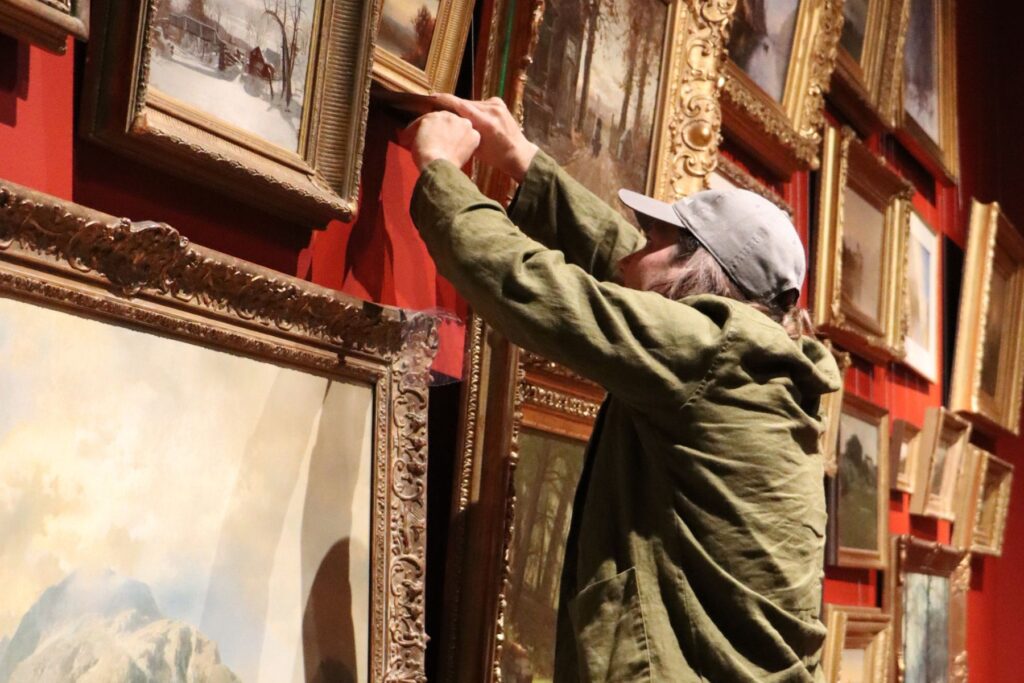
It wasn’t always the plan. I was studying for my BFA at UCF when the campus gallery hosted an artist talk. I attended, and afterward I just loved being in that space — so I asked if I could volunteer. After about three months of showing up consistently, they offered me a position as gallery assistant. From there it became clear that I wanted to work in museums. I’ve been a lifelong art lover and artist, so getting a chance to go behind the scenes and work with the university’s collection just sparked something in me. Whether it was coming up with solutions to protect the artwork or installing and deinstalling shows, this world completely fascinated me.
Q: What gap were you trying to fill when you started Preparator Solutions?
After UCF, I went on to work with several of Orlando’s museums and eventually joined a large art handling and shipping company. While I was there, I started to notice that there wasn’t much middle ground in the industry. You had big box international companies, essentially the Walmart equivalent, but local companies were nearly non-existent. At the same time, I was watching museums and contemporary spaces struggle to find extra hands during high season — people who actually knew museum standards and practices. I wanted to create something that could provide local museum-quality contract work, on demand.
Q: Does being an artist yourself change how you approach handling someone else’s work?
In the beginning, definitely. Being an artist gives you a head start. You already understand techniques and processes, things you’ve done or been exposed to. But in the world of preservation, we follow a lot of standard practices, and after thirteen years it becomes more about knowing the systems. What has stayed constant is how I think about the work itself. I know firsthand that everything we handle is priceless, whether the value is sentimental, historical, or personal. So it becomes very important to me that I do not only what I think is right, but what’s best for the object itself.
Q: Has being so immersed in other artists’ work influenced your own practice?
Absolutely. One of the great joys of this job is being constantly surrounded by work — contemporary and historical. I love being reminded of how the masters worked, how artists both living and gone completed these projects. Getting to hold a work, to see the back of it, to understand the process behind it — that’s one of my favorite things about what I do. You become inundated with art in a way most people never get to experience, and it never stops being remarkable.
Q: What do you think is most misunderstood about art handling?
To the general public, I think most people might not even realize there IS a behind the scenes when it comes to large exhibitions. Part of the magic of our job is making it look like the space transformed itself. So people can walk into a museum and imagine it all just appeared. Within the industry, the biggest misconception is that there’s a catch-all handbook — that if you know the rules, you know how to handle everything. The reality is we deal with vastly different materials, practices, and systems, and sometimes the rules contradict each other. The real skill is knowing when and how to navigate those contradictions, and treating every piece as an individual rather than assuming there’s a universal process.
Q: You’ve mentioned the connection between art and history a lot. What does preserving that mean to you personally?
It’s extremely important to learn from our history — to understand humanity through what it has made. Art has always been a vehicle for showing what’s happening in the world: how communities, nations, and individuals reflected their time. Preserving that record is how we carry it forward. History is doomed to repeat itself unless we learn from both the mistakes and the great accomplishments of those who came before us. So to me, preserving artwork is preserving community. It’s preserving history and culture. That’s what’s actually at stake.
Q: Is there a project that has stayed with you — something that changed how you see the work?
Honestly, there are many. I’ve worked on an incredibly broad range of projects — everything from craning multi-thousand pound sculptures into high-rise Miami apartments, to handling antiquities from ancient Egypt. Each one has brought me into spaces and introduced me to information I don’t think I would have found any other way. But more than any single piece, what stays with me is the people. The specialists, conservators, and experts I’ve had the privilege of working alongside — spending two weeks with someone going over every detail of how to handle their specific collection, talking about it to the point of exhaustion. Those are the moments I learn the most. Not from the objects themselves, but from the people who have dedicated their lives to understanding them.
Q: What do you want Preparator Solutions to stand for ten years from now?
The same thing it stands for today. An institution that takes care — and genuinely cares — about the preservation of these pieces and what they mean to all of us. I love being part of the process of protecting this history, but protection without accessibility means nothing. I’m always grateful that this company gets to be part of sharing that knowledge, of giving the public a chance to reflect on great work and maybe be expanded by it.