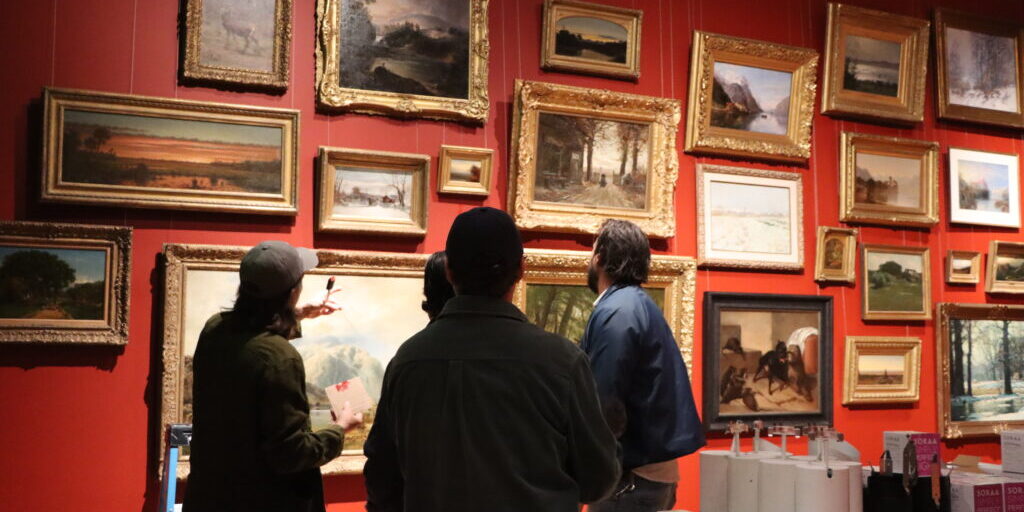
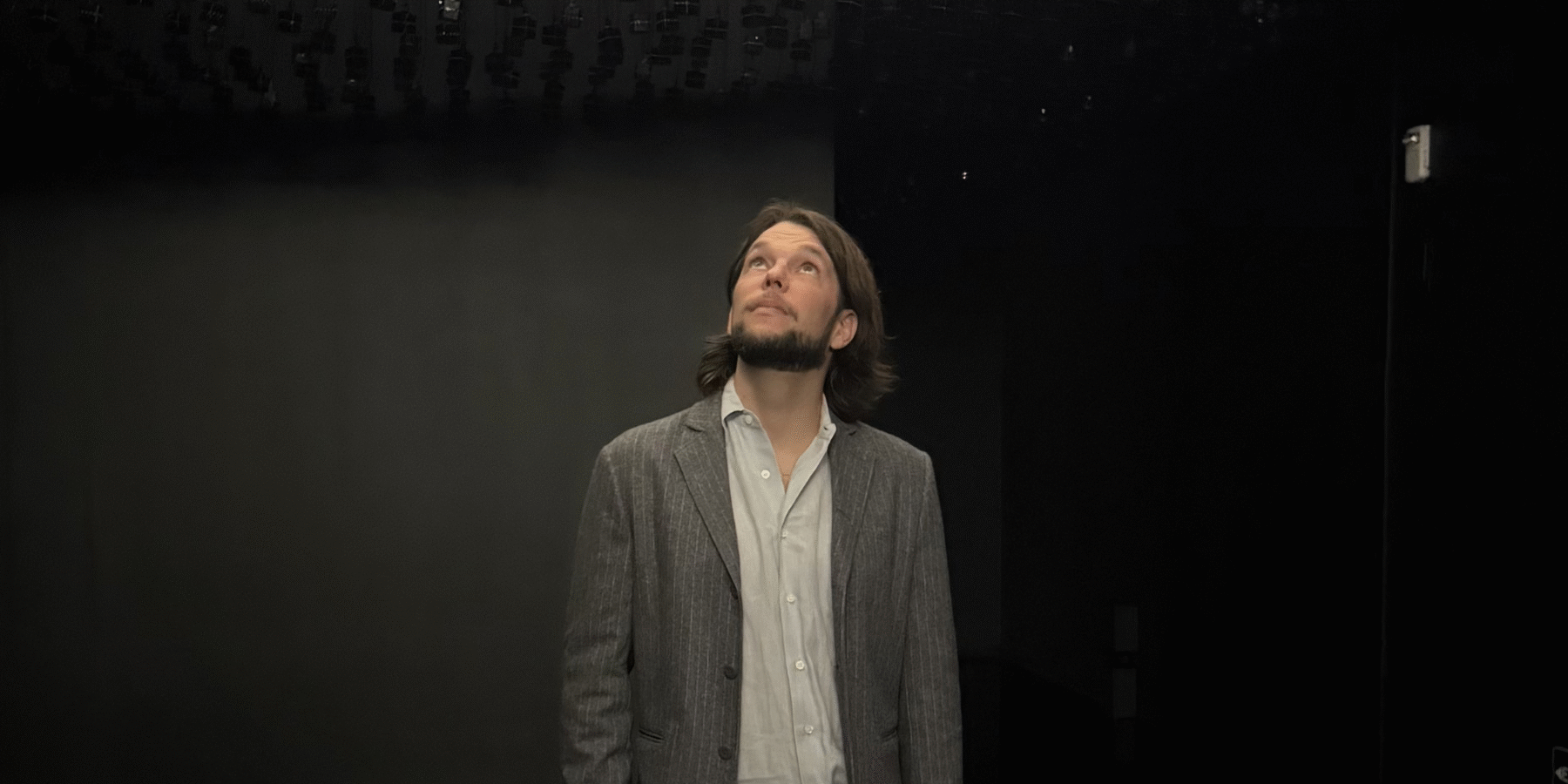
There is a part of art handling that most people never see — and it happens in the space between. Between one institution and the next. Between a work leaving one set of walls and arriving at another. Transit is the most vulnerable moment in an artwork’s life. It is the time when the work is most exposed, most dependent on the decisions made before it was sealed inside a crate. Those decisions live at the intersection of art and engineering.
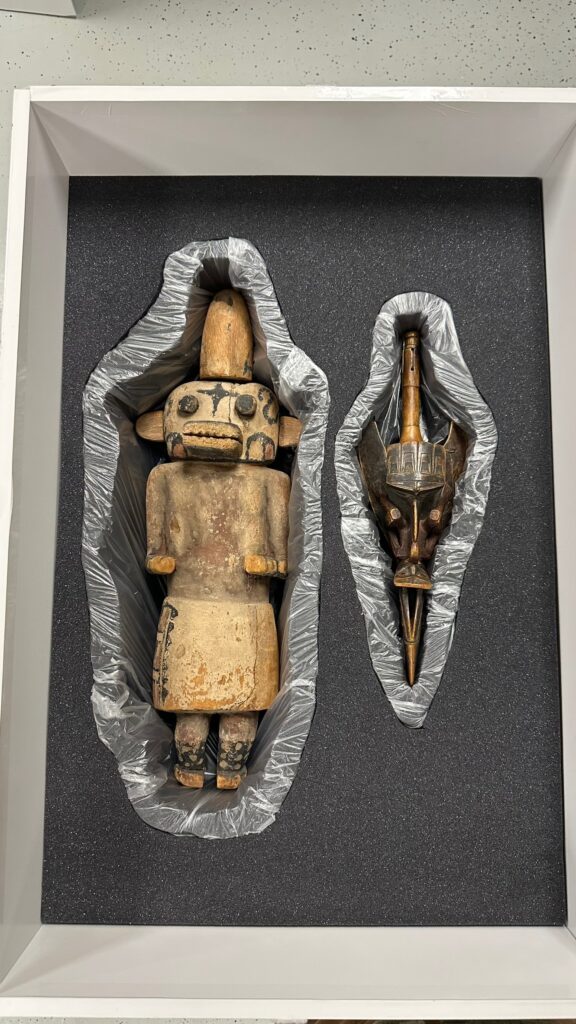
Every work presents a different problem. A 15th century painting with a heavily impastoed surface and a fragile, ornate frame carries entirely different risks than a large-scale sculpture, which carries different risks than a small, precious object made of delicate material. The age of a work affects how it responds to temperature and humidity fluctuation. The medium determines what can and can’t make contact with the surface. The weight and geometry of a sculptural form dictates how it needs to be supported so it doesn’t shift or bear pressure in the wrong places. There is no universal solution — only a specific one, designed around a specific object, for a specific journey.
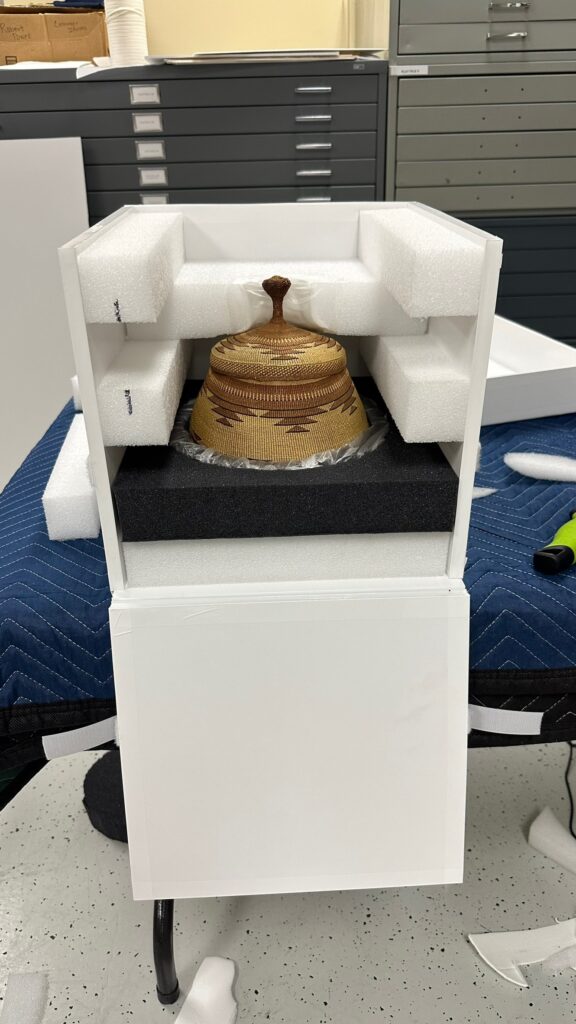
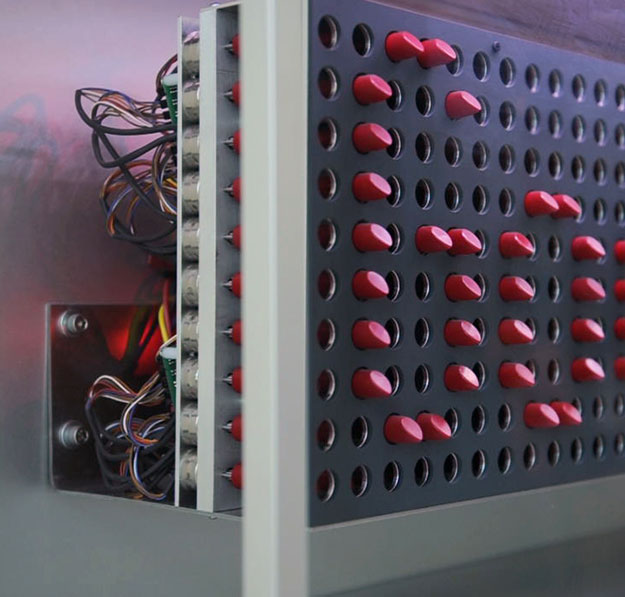
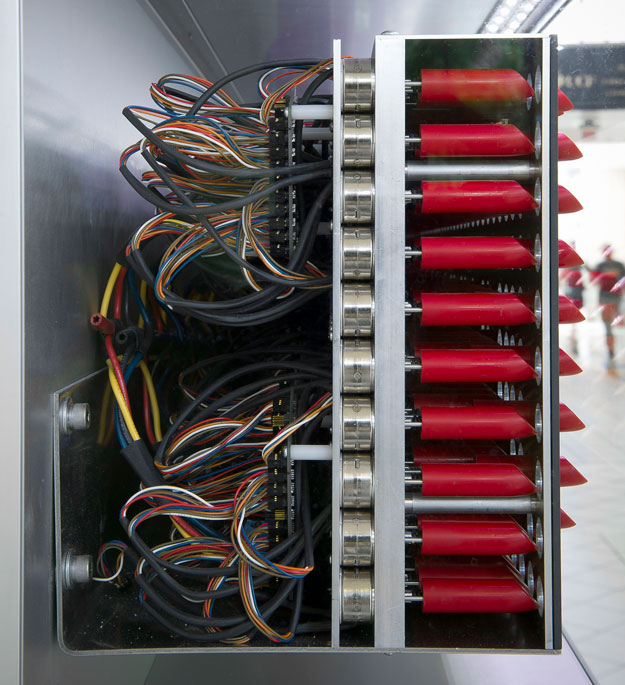
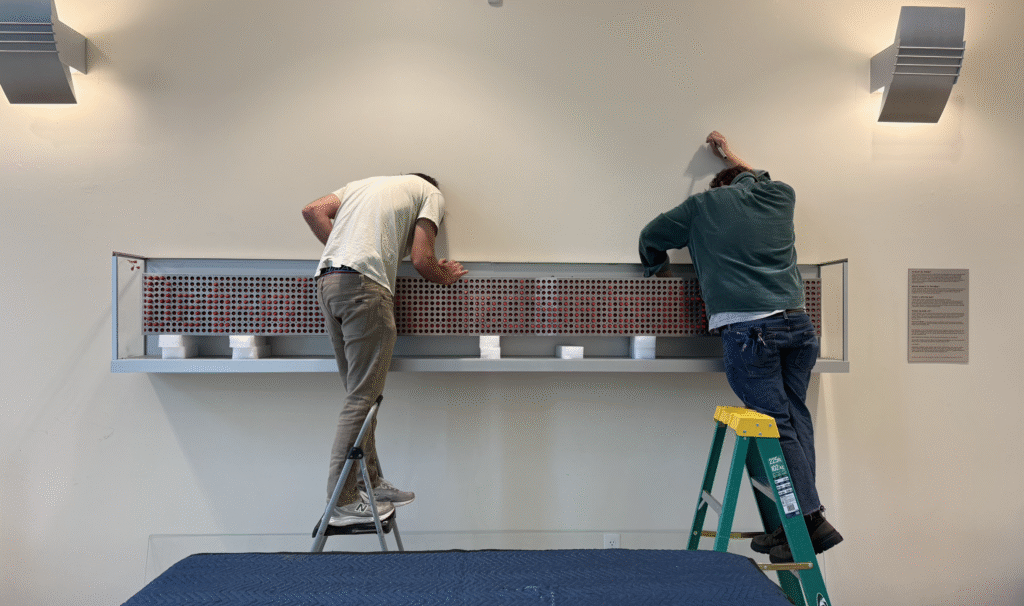
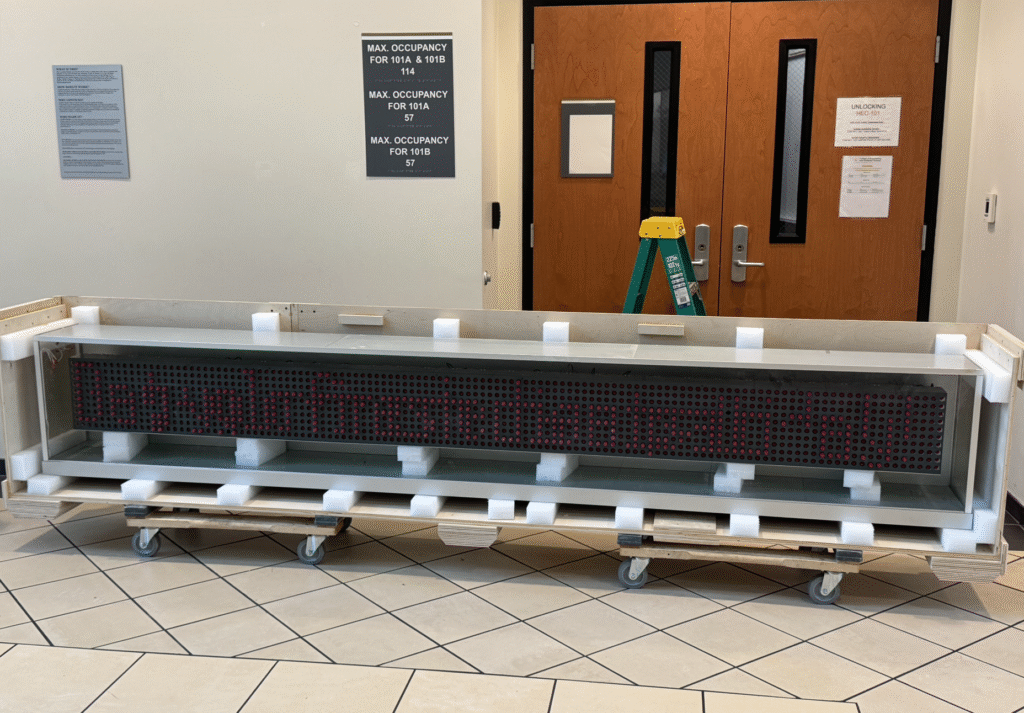
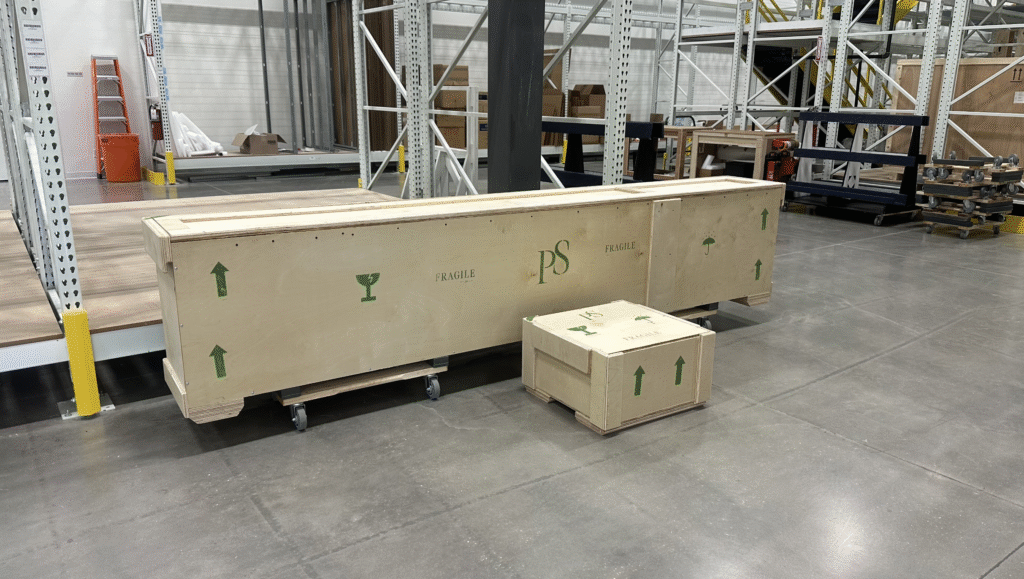
Nothing illustrates this connection between art and engineering more vividly than a work we recently had the privilege of moving. Lipstick Enigma, by Janet Zweig, had lived in the engineering building at the University of Central Florida since 2010. The work is a large-scale kinetic installation made of 1,200 resin lipsticks, 1,200 stepper motors, and 60 circuit boards, driven by a computer program that generates a new sentence every time someone walks past. It is a machine. It is also art. Custom-engineered and custom-manufactured, built through a collaboration between the artist and a team of engineers, every part of it exists as a one-of-a-kind invention. When it was time for it to return home to its creator, we had the pleasure of protecting it on that journey — and the crate we built had to think as carefully as the work itself.
Another recent project of ours brought a different kind of challenge — one that looked simpler on the surface but demanded the same level of care. A sensitive painting traveling between institutions required a custom interior travel frame: a structure built inside the crate that suspends the work completely free of contact with any hard surface. No pressure on the frame. No risk of the surface shifting against the interior during transit. The painting will travel inside its own isolated environment, floating independently of everything around it — arriving exactly as it left.
What every crating project shares is the same underlying logic. Protecting art in transit is not a generic problem. It is an engineering problem, solved through an understanding of materials, structure, and the specific vulnerabilities of the object being protected. The art informs the engineering, and the engineering serves the art. That is the work Preparator Solutions does in the space between — and if you have a work that needs to travel, we’d be glad to help you think through what it needs.